ラベル villa: Muxía の投稿を表示しています。 すべての投稿を表示

2011/04/25

アルバム (15) / Album (15) / Álbum (15)

今回のアルバムはフィニステッラとムシーアです。


【写真1:フィニステッラにて(2008年9月13日)】


【写真2:フィニステッラの遺跡(2008年9月13日)】


【写真3:フィニステッラの町(2008年9月13日)】


【写真4:ムシーアにて(2008年9月13日)】


【写真5:ムシーアの海辺の教会(2008年9月13日)】


【写真6:月夜のムシーア(2008年9月13日)】


===(resume)==================
This is the album of the photos I took in Finisterra and Muxía.

Photo 1: At Finisterra, 13 Sep 2008.
Photo 2: The remains in Finisterra, 13 Sep 2008.
Photo 3: The town of Finisterra, 13 Sep 2008.
Photo 4: At Muxía, 13 Sep 2008.
Photo 5: The church by the sea in Muxía, 13 Sep 2008.
Photo 6: The moonlit Muxía, 13 Sep 2008.
=============================

===(resumen)=================
Este es el álbum de las fotos que tomé en Finisterre y Muxía.

Foto 1: En Finisterra, 13 sep 2008.
Foto 2: Los restos en Finisterra, 13 sep 2008.
Foto 3: La villa de Finisterre, 13 sep 2008.
Foto 4: En Muxía, 13 sep 2008.
Foto 5: La iglesia al mar en Muxía, 13 sep 2008.
Foto 6: La luz de la luna en Muxía, 13 sep 2008.
=============================

2011/04/10

祭り、再び (2) / Festival, again (2) / Fiesta, de nuevo (2)

日が沈んで完全に暗くなってしまった道を歩いて、海岸から祭りの会場へと移動した。


【写真1:ムシーアのお祭り その1(2008年9月13日)】

ムシーアでのお祭りは、ポルトマリーンとは趣が異なり露店がたくさん出ていて、日本のお祭りに近いように感じた。
会場も綺麗にライトアップされていた。


【写真2:ムシーアのお祭り その2(2008年9月13日)】


バスの出発までは30分程あるから、好きに見て回るといいと言われたので、歩いてみると大体は日本のお祭りの露店と変わらないように感じた。
お菓子などの食べ物の露店が中心で、特に面白そうなものもなかったので、飲み物を飲みながら時間を潰した。

帰りのバスの中では、メンバーから、サンティアゴで中島先生に渡すためのTシャツにコメントを書くことにしたと言われた。
バスに揺られながら、今回のカミーノ講習を企画してくれたこと、10日以上に渡って引率してくれたことなどを思い出しながら、お礼の言葉を書いた。


===(resume)==================
Walking in the dark, we moved from the shore to the place of the festival. The festival was not like the one we had in Portomarín but looked like the Japanese festival. We had about 30 minutes till the bus would come and every member looked around the candy stalls or something like that. On the bus to Santiago, I was told by some members of the Camino course that we would write some words of thanks on a T-shirt to say thank you to Ms. Nakajima. I agreed with them and wrote down some words remembering these two weeks .... (Photo 1: The festival in Muxía no.1, 13 Sep 2008; Photo 2: The festival in Muxía no.2, 13 Sep 2008.)
=============================

===(resumen)=================
Andando en la oscuridad, nos trasladamos desde la orilla hasta el lugar de la fiesta. Ella no era como la que concimos en Portomarín, pero parecía como el festival japonés. Tuvimos unos 30 minutos hasta que el autobús venía, entonces todos los miembros recorrían los puestos de dulces o algo así. En el autobús a Santiago, me dijeron algunos miembros del curso Camino, que iban a escribir algunas palabras en camiseta para agradecer a Sra. Nakajima. Estuve de acuerdo con ellos y escribió unas palabras recordando estas dos semanas .... (Foto 1: La fiesta en Muxía núm.1, 13 sep 2008; Foto 2: La fiesta en Muxía núm.2, 13 sep 2008.)
=============================

2011/04/05

太陽の死 (3) / Death of the Sun (3) / Muerte del sol (3)

太陽が沈んでしまってから、海岸にあった岩と教会を見学した。


【写真1:安産祈願の岩(2008年9月13日)】

その岩は二枚貝の片方のような形をしており、安産祈願の岩だという。地面と岩の間に人がやっと通れる程度のスペースがあり、そこを通ると子宝に恵まれるのだ、と。
何人かが岩くぐりにトライするのを見ていた。


【写真2:日没の教会(2008年9月13日)】

教会の床は砂で覆われていて、中には小さな祭壇があった。


【写真3:教会の祭壇(2008年9月13日)】

二階の祭壇も見学して外に出ると、かなり暗くなっていて、星が瞬いていた。
遠くから音楽が聞こえてきた。
祭りが始まっているようだった。


===(resume)==================
After the sunset, we visited a rock and a church. The rock was like a half part of bivalve on the ground and it was for children and easy delivery. And the church had a small altar on the floor covered with the sands. We visited another altar on the second floor and got out of the church, when we found stars in the sky and heard some music. The festival seemed to be started. (Photo 1: The rock for easy delivery, 13 Sep 2008; Photo 2: The church after the sunset, 13 Sep 2008; Photo 3: The altar of the church, 13 Sep 2008.)
=============================

===(resumen)=================
Después de la muerte del sol, visitamos una roca y una iglesia. La roca era como una parte de la mitad de bivalvos en el suelo y era para niños y un alumbramiento fácil. Y la iglesia había un pequeño altar en el suelo cubierto con las arenas. Visitamos otro altar en el segundo piso y salimos de la iglesia, entonces nos encontramos con estrellas en el cielo y oímos música a distancia. La fiesta parecía que se iniciaba. (Foto 1: La roca para un alumbramiento fácil, 13 sep 2008; Foto 2: La iglesia después de la puesta del sol, 13 sep 2008; Foto 3: El altar de la iglesia, 13 sep 2008.)
=============================

2011/03/30

太陽の死 (2) / Death of the Sun (2) / Muerte del sol (2)

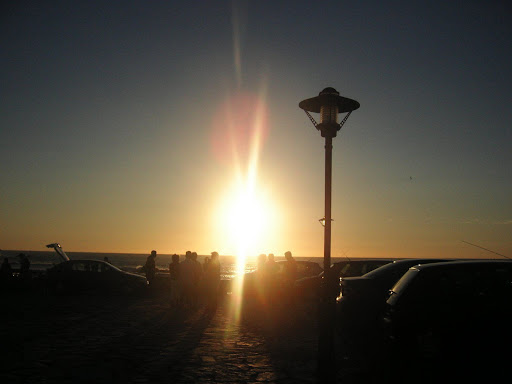
今回はまだ9月13日の途中ですが、ムシーアでの日没の写真が多いのでミニ・アルバムとします。


【写真1:日没間近(2008年9月13日)】


【写真2:海岸にて、その1(2008年9月13日)】


【写真3:海岸にて、その2(2008年9月13日)】


【写真4:日没、その1(2008年9月13日)】


【写真5:日没、その2(2008年9月13日)】


===(resume)==================
There're a lot of pictures of the sunset in Muxía, so here's an album.

Photo 1: The sun almost dying, 13 Sep 2008.
Photo 2: At the sea shore no.1, 13 Sep 2008.
Photo 3: At the sea shore no.2, 13 Sep 2008.
Photo 4: The sunset no.1, 13 Sep 2008.
Photo 5: The sunset no.2, 13 Sep 2008.
=============================

===(resumen)=================
Hay un montón de fotos de la puesta del sol en Muxía, así que aquí un álbum.

Foto 1: El sol casi muriendo, 13 sep 2008.
Foto 2: En la orilla del mar núm.1, 13 sep 2008.
Foto 3: En la orilla del mar núm.2, 13 sep 2008.
Foto 4: La puesta de sol núm.1, 13 sep 2008.
Foto 5: La puesta de sol núm.2, 13 sep 2008.
=============================

2011/03/25

太陽の死 (1) / Death of the Sun (1) / Muerte del sol (1)

午後8時半、講義が終わると、まだ明るい町の中を歩いて、ムシーアの海岸へと向かった。


【写真1:海岸へ(2008年9月13日)】

既に、太陽はほとんど海面に近いところにあって、たくさんの人が日没を待ちわびていた。見晴らしのいいところへたどり着いて、皆で岩場に佇んで、大西洋へと太陽が「死んで」いくところを眺めた。
考えているよりも沈むスピードが速く、10分もしないうちに太陽は完全に姿を隠してしまった。しかし、まだ光は届いていて、どことなく空は明るかった。


【写真2:海岸のオブジェ(2008年9月13日)】

海で日没を見た経験がないわけではなかったが、250kmの巡礼の果てに見る日没は、静かな感動を与えてくれた。


===(resume)==================
At eight thirty, the lecture finished and we walked to the sea shore. The sun was almost "dying" and many people were there to see it. As we watched the sun set, the sun went down much faster than I expected. Ten minutes later, the sun was under the horizon. This experience, which was after the 250 kilometers walk, made me touched quietly. (Photo 1: To the shore, 13 Sep 2008; Photo 2; An art object on the shore, 13 Sep 2008.)
=============================

===(resumen)=================
A las ocho y media, la clase terminó y nos andabamos a la orilla del mar. El sol estaba casi "muriendo" y muchas personas estaban allí para verlo. Cuando estabamos viendo el sol, se puso mucho más rápido de lo que había esperado. Diez minutos más tarde, el sol estaba completamente bajo el horizonte. Esta experiencia, que fue después de los 250 kilómetros a pie, me tocó silenciosamente. (Foto 1: En la costa, 13 sep 2008; Foto 2; Un objeto de arte en la costa, 13 sep 2008.)
=============================
2011/03/20

ムシーアの講義 / Lecture in Muxía / Clase de Muxía

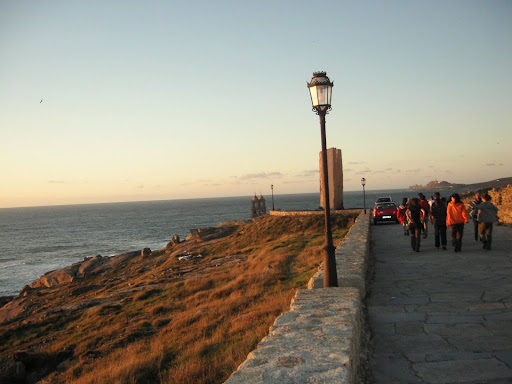
ムシーアでは、フィニステッラとムシーアが巡礼と結び付けられた流れについて講演していただいた。これまでに聴いた話の集大成のようなであった。


【写真:ムシーアにて(2008年9月13日)】

新しく聞いた話としては、サンティアゴからフィニステッラまでの巡礼路はローマ時代からあったということ、生と死にまつわるガリシアの異教的信仰は生殖とも深く結びついていたことなどである。

中世には、異教的要素をキリスト教化するために、マリア信仰と異教的信仰が結びついて布教を助けたり、太陽の再生とキリストの復活をなぞらえたりするなど様々な手法がとられた。また、死の文化と結びついたために、他のキリスト教圏では死の直前のイエス像が一般的であるのに対し、ガリシアでははっきりと死んでいる様子が分かるようなキリスト像が普及した。これらのキリスト像には海からやってきたという伝説もあるらしい。

キリスト教の拡大の一側面ということで、西洋史を学ぶ者にとって興味深い講義であった。


===(resume)==================
The lecture was like a compilation of the past lectures, but there were new things. I heard that the road of pilgrimage from Santiago to Finisterra had already existed since the Roman period and also that the pagan tradition of Galicia about life and death was deeply connected with procreation. Furthermore, we were taught that in the Middle Age, this pagan tradition was combined with the faith in Virgin Mary in order to christianize the local people. The combination with the culture of death made it more usual that in Galicia the statues of Jesus Christ are represented by his clearly dead body, though in Europe it is more natural for them to be represented by his dying body. These stories were so interesting. (Photo: At Muxía, 13 Sep 2008.)
=============================

===(resumen)=================
La clase era una recopilación de las últimas, pero había cosas nuevas. Hemos oído que el camino de peregrinación desde Santiago hasta Finisterra ya había existido en la época romana, y también que la tradición pagana de Galicia sobre la vida y la muerte, fue profundamente conectada con la procreación. Por otra parte, nos enseñó que en la Edad Media, esta tradición pagana se combinó con la fe en la Virgen María con el fin de cristianizar la población local. La combinación con la cultura de la muerte lo hizo más habitual que en Galicia las estatuas de Jesucristo está representado por su cuerpo claramente muerto, aunque en Europa es más natural que son representado por su cuerpo muriendo. Estas erhistorias an tan interesantes. (Foto: En Muxía, 13 sep 2008.)
=============================

2011/03/15

祭り、再び (1) / Festival, again (1) / Fiesta, de nuevo (1)

目が覚めると渋滞と人ごみの中にいた。


【写真1:ムシーアの入り口にて(2008年9月13日)】

ムシーアでは今宵、祭りが開かれるという。
こちらでの祭りは、ポルトマリーンに続いて2回目であるが、車内から町の様子を眺めていると、ポルトマリーンとは規模が全く異なっているのがよく分かった。道路脇にはたくさんの車が停まっていたし、あちこちに人だかりができていた。ちょうど祭りの季節なのか、あるいはスペイン人がお祭り好きなのか、多分両方だろう。

バスから降りて、少し休憩していると、時計は6時半を指していた。
アルベルゲの一室へ移動して、カミーノ講習最後の講義が始まった。


【写真2:ムシーアのアルベルゲ(2008年9月13日)】


===(resume)==================
When I woke up, the bus was caught in a traffic jam at the entrance of Muxía. They said that a festival was to be held. This was the second festival that I experienced in Spain, but it was far bigger and more crowded than that of Portomarín. I imagined whether it's a season for festivals or Spanish people like festivals so much. When we got off the bus, it was already six thirty. We moved to an albergue to take the last class of the course of Camino. (Photo 1: At the entrance of Muxía, 13 Sep 2008; Photo 2: The albergue of Muxía, 13 Sep 2008.)
=============================

===(resumen)=================
Cuando me desperté, el autobús quedó atrapado en un atasco de tráfico a la entrada de la villa de Muxía. Dijeron que una fiesta se celebraría. Éste fue el segundo fiesta que sabíamos en España, pero era mucho más grande y más llena de gente que la de Portomarín. Me imaginé si era una temporada de fiestas o a los españoles gustan las fiestas. Cuando nos bajamos del autobús, ya las seis y media. Nos mudamos a un albergue para tomar la última clase del curso del Camino de Santiago. (Foto 1: En la entrada de Muxía, 13 sep 2008; Foto 2: El albergue de Muxía, 13 sep 2008.)
=============================